
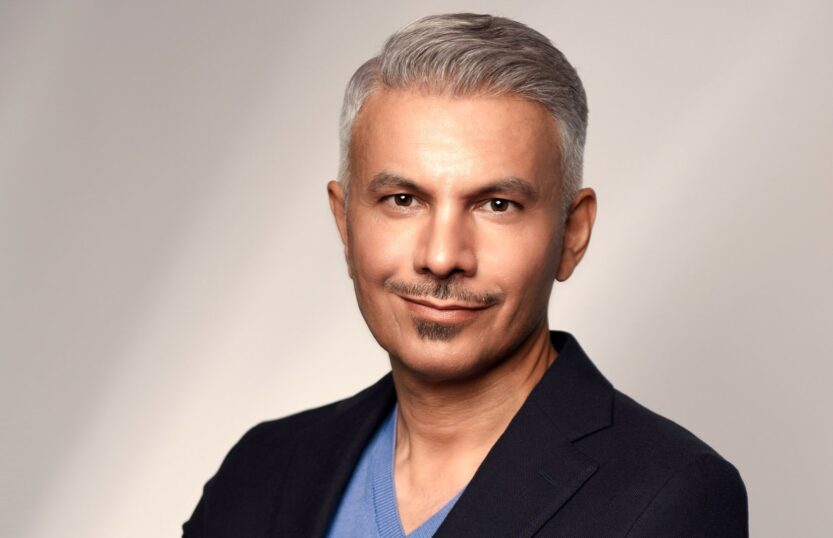
Reza Razavi Razavi gives a face to the topic of economic and societal transformation. After positions at the Management Center St. Gallen and the BMW Group, he is now a sought-after interviewee, speaker, and consultant. With an open mind, images, stories, and interconnected thinking, Razavi paints a highly relevant overall picture, far removed from the often polarizing Silicon Valley discussions. He will be a guest at the Brand Forum in Brand on June 24th. We spoke with him beforehand.
How do you currently perceive the topic of transformation?
We are facing one of the biggest system transformations in history: digitization, globalization, individualization and increasing complexity are the drivers and set a high pace.
How do we experience this?
Transformations have an impact on all areas of life – from economics and politics to education and science, and even our personal identities. Transformations not only change our environment, they also change us: the way we live, think, work, and interact with each other.
Can we continue to leave change to chance? Can we afford to rely on fate and sit idly by?
I don't think that's very wise. In my view, transformation is the most important issue facing society and the economy today. Whether we fail or rise to new heights, the future lies in our hands and minds, and we can shape it. The crucial factor is how we tackle these transformation challenges and how we utilize our existing potential to promote success and minimize risks.
What do we need to do to achieve this?
We need to take action and participate in shaping the future. However, I don't believe that such a transformation can be planned, mandated, or directed. There's no recipe, no change checklist, and no single right strategy. If we want to motivate people to change, we can't reach everyone with the exact same images, the same sound, the same narrative. In other words, transformation is a process of discovery and experimentation that isn't linear, but rather an exploratory, iterative, cyclical creative process with an open outcome. It challenges everyone involved in an intense way.
What is needed for the transformation to succeed?
Creating a strong shared purpose and new images, positive visions of the future, and stories of a different, successful culture—this can motivate people to participate passionately and responsibly. This can ignite a yearning for change. New mental images must emerge, and new paths must be forged. Spaces must be opened for dialogue and experimentation on equal footing. In this way, a connection can be forged between concepts, logic, reason, and emotions.
The Brand Forum focuses on the topic of branding. What can brands contribute to a successful transformation?
They foster a shared identity. They convey values. Brands become symbols of cultural ideals shared by people with similar worldviews. Brands take a socio-political stance, raise their voices, and make a social contribution. Given the challenges facing our world, this is excellent news.
To person:
Reza Razavi was born in Iran, the son of a doctor. At the age of 14, he and his older sister came to Germany without their parents. After a year of German lessons, he graduated from high school at 19. He began studying mathematics in Hanover and, at the same time, opened a restaurant with a friend, which became a popular local spot. Today, Reza Razavi is an independent consultant, sparring partner, and speaker on the topic of economic and societal transformation.