
Thanks to a more open corporate culture, the family-owned company Swarovski is now closer to its customers. The brand has also become more tangible.
For 120 years, Swarovski has been one of the leading manufacturers of cut crystal glass. For five generations, this family-owned company from Wattens in Tyrol has successfully maintained its brand appeal and business success through innovation and research. The courage to break new ground is also part of its secret to success.
A sparkling brand
In the 1970s, the company was affected by the Great Depression. While Swarovski had previously supplied loose crystals to companies for further processing, the 1976 Winter Olympics in Innsbruck presented an opportunity to enter the consumer goods market, selling directly to end customers and thus establishing the brand in a new territory. The first products launched were a round crystal keychain and a small crystal mouse. "Today, the consumer goods business forms a very large pillar of the company, and considerable retail expertise has been developed. Since the early 1980s, 3,000 stores have been opened in 170 countries," says Andrea Durnthaler, Director of Group Communication at Swarovski. Swarovski Crystal Business generates annual sales of €2.7 billion. The company employs 29,000 people worldwide. With a brand value of €3.6 billion, Swarovski ranks second among Austria's most valuable brands.
Insight into the brand strategy
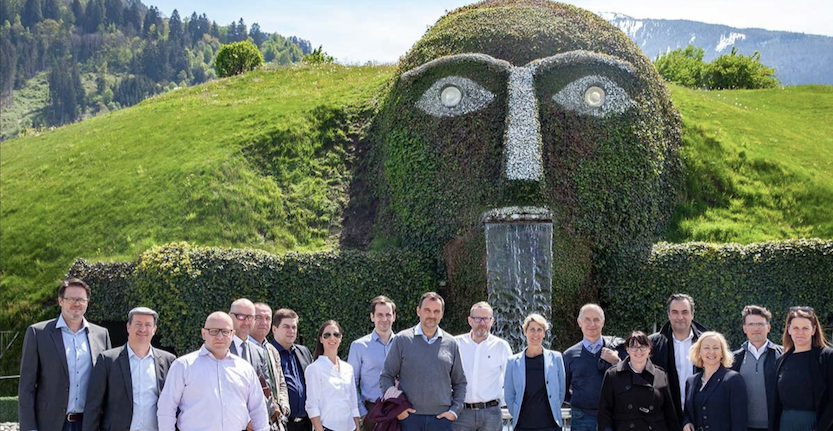
In recent years, new paths have been increasingly explored, leading to a more open corporate culture. While production in Wattens was previously confined to closed factory gates, the company is now moving closer to its customers and focusing on collaboration. Examples of this, such as the new crystal manufactory and Swarovski Crystal Worlds, were open to interested visitors on a guided tour during Brand Day, organized by the Brand Club Austria on May 7th. An insight into the brand strategy was also provided. "I always find it fascinating at our Brand Days to learn how things came about, how opportunities were recognized, and how companies have developed. The culture of innovation cultivated at Swarovski also offers a glimpse into how Swarovski has been successful for 120 years," explains Charlotte Hager, Managing Director of the Brand Club Austria.
Customer service partners
The Swarovski manufacturing facility opened in autumn 2018 as part of a €100 million investment package. Spanning 7,000 square meters, it offers B2B clients a modern environment where they can realize their creative ideas together with around 100 Swarovski experts within just a few hours. "Swarovski focuses on acting as a service and creative partner and stands for the unique symbiosis of traditional craftsmanship and cutting-edge technologies. Flagship projects like the manufacturing facility are an investment in the future. The vision was to create a space for inspiration and co-creation that supports clients in transforming their ideas into genuine crystal objects in the shortest possible time," says Andrea Durnthaler.
Crystal Worlds was founded in 1995
A first step towards opening up to customers was the founding of Swarovski Crystal Worlds in 1995. "Swarovski wanted to make the brand tangible for customers and visitors and place crystal within the realm of perception," says Christiane Gasser, Head of Marketing & Communications, D. Swarovski Tourism Services GmbH. With 650,000 visitors a year, Crystal Worlds is not only a must-see destination in Europe, but also a best-practice example of how to perfectly showcase a brand. "Crystal is presented with light in such a way that it touches the visitor's heart," says Gasser. And so the Chambers of Wonder not only amaze visitors, but also inspire them to buy. While the purchase rate in regular stores is around 17 percent, it ranges from 36 to 38 percent in Crystal Worlds.
Cooperation with the tourism industry
Another topic of the brand day was Swarovski's collaboration with the tourism industry to generate more added value for the country. A current initiative aims to encourage Chinese and Indian visitors, who typically only come as day tourists, to stay for one or two nights. This collaboration with the tourism industry encompasses not only Austrian and Tyrolean tourism boards, but also Munich Airport and Bavaria Tourism, as well as competitors such as Neuschwanstein Castle, BMW Welt Munich, and tourist destinations in Switzerland.
The program included not only a visit to the Wattens Museum and Swarovski Crystal Worlds, but also a guided tour of the new manufacturing facility, which is normally only accessible to select B2B clients. True to the motto of the Brand Club Austria, entrepreneurs and executives were able to experience the Swarovski brand firsthand, feel its spirit, and gain a deeper understanding of it, taking valuable insights into innovation, the courage to explore new paths, and a commitment to the company's location back to their own businesses.